
Artificial Intelligence is transforming the workplace at an unprecedented pace. Organizations across industries are investing heavily in AI tools, automation, data analytics, and digital transformation initiatives. Yet, as companies race to adopt new technologies, many are overlooking a critical factor that will determine long-term success.
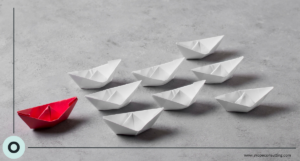
According to Harvard Business School Professor Tsedal Neeley, the most important competitive advantage in the AI era is not technology itself. It is Change Fitness: an organization's ability to continuously adapt, learn, and evolve in response to ongoing transformation.
While technology can be acquired, true organizational adaptability must be built.
What Does Change Fitness Look Like?
Organizations with high levels of change fitness share several characteristics:
1. AI Literacy Across the Workforce
AI is no longer the responsibility of IT teams alone. Employees at all levels need a foundational understanding of AI, its opportunities, limitations, and impact on their roles.
Building AI literacy helps organizations make informed decisions, increase adoption, and reduce resistance to change.
2. A Culture of Continuous Learning
In today's business environment, skills become outdated faster than ever before.
Organizations that foster continuous learning encourage employees to develop new capabilities, embrace innovation, and remain adaptable in the face of evolving business demands.
3. Agile Ways of Working
Traditional operating models often struggle to keep pace with rapid change.
Agile organizations empower teams to collaborate, experiment, learn quickly, and respond effectively to new challenges and opportunities.
4. Adaptive Leadership
Leaders are increasingly expected to guide teams through uncertainty while maintaining engagement, performance, and alignment.
The ability to lead through ambiguity has become a defining leadership competency for the future.
Why This Matters for HR
The rise of AI has fundamentally changed the role of Human Resources.
Learning and Development can no longer be viewed as a support function focused solely on delivering training programs. Instead, it has become a strategic capability that enables organizational resilience, innovation, and growth.
Today's HR leaders are expected to:
- Build future-ready skills
- Foster learning cultures
- Develop adaptive leaders
- Drive workforce transformation
- Support organizational agility
In many ways, HR has become the architect of organizational adaptability.
The Cost of Ignoring Change Fitness
Organizations that focus exclusively on technology implementation often face challenges such as:
- Low adoption of new systems
- Resistance to change
- Skills gaps
- Leadership misalignment
- Reduced employee engagement
Technology can accelerate transformation, but people determine whether transformation succeeds.
Without a workforce that is prepared to adapt, even the most advanced technologies may fail to deliver their intended value.
How SKOPE Helps Organizations Build Change Fitness
At SKOPE, we help organizations build the agility, capabilities, and leadership needed to thrive in a constantly changing environment.
Align
Align people, capabilities, and organizational priorities with business goals through workforce planning, competency frameworks, HR strategy, and change readiness assessments.
Develop
Equip leaders and employees with future-ready skills through leadership development, AI literacy, learning strategies, capability-building, and change management programs.
Perform
Turn capability into results through performance management, leadership coaching, employee engagement, and organizational effectiveness initiatives.
Building a Future-Ready Organization
Change is no longer an occasional event. It is a constant reality.
The organizations that succeed will be those that can continuously learn, adapt, and perform in the face of ongoing transformation.
Align. Develop. Perform. with SKOPE.